Excavation Contractors Sydney: What Builders Should Check Before You Appoint One
What builders should check before appointing an excavation contractor in Sydney: owned plant, rock pricing, spoil volumes, certification and program.
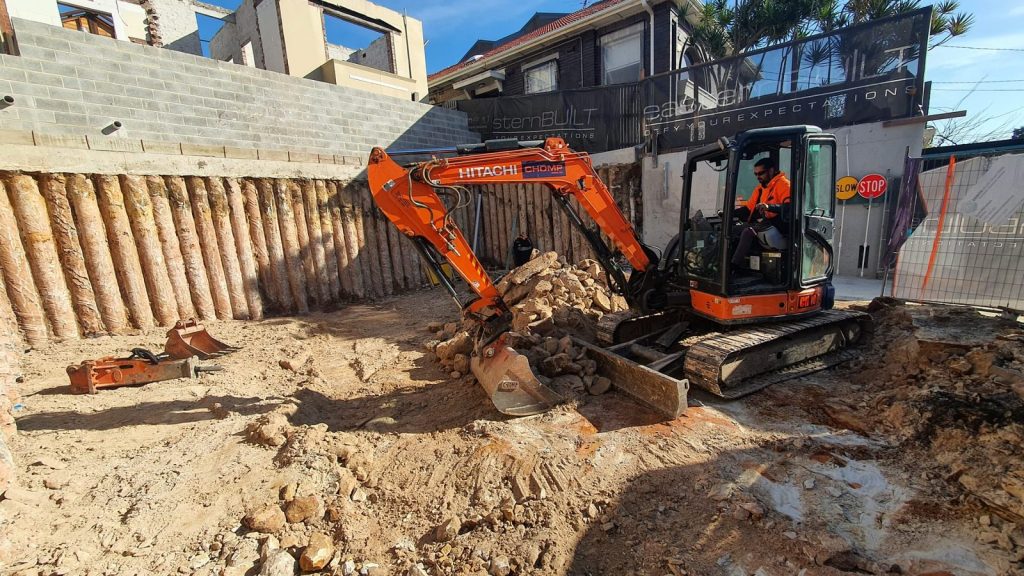
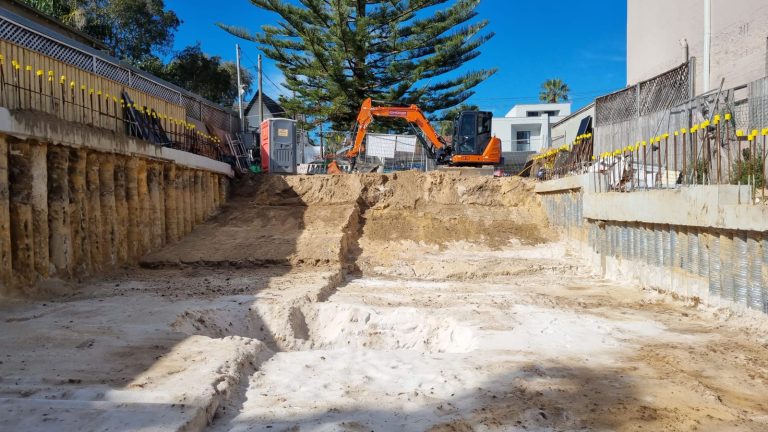
If you are appointing an excavation contractor on a Sydney build, the things that actually determine whether the program holds are the plant they own rather than sub-hire, how they handle rock and spoil, whether they self-perform certification testing, and whether they can carry the site through to handover of a certified level. Price is the last thing to compare, not the first.
This is written for builders, and it is deliberately about capability rather than quoting. For the demolition equivalent, our guide to what to check before appointing a demolition contractor covers that trade.
At a glance
- Ask what plant they own, not what they can hire
- Confirm how rock is priced and how it is measured on the day
- Spoil volumes should be quoted at the loose rate, not in-ground
- Ask who carries out compaction testing and level certification
- Check they can work to your datum, not simply “to level”
- Confirm how they handle services and unexpected finds
What separates a good excavation contractor from a cheap one?
Four things, and none of them show up on a rate.
Ownership of plant. A contractor who owns the machines controls their own start date. One who sub-hires is at the mercy of whoever else booked the machine that week, and on a wet program that gap costs you more than the rate difference.
Rock methodology. Rock is the single largest swing on most Sydney digs. Ask how it is measured, whether it is per cubic metre or per hour, and who agrees the boundary on the day. A contractor who cannot answer that clearly has not done many rock jobs.
Spoil accountability. Volume calculation, truck movements, tip selection and whether material can be reused on site. A contractor who quotes a lump sum for disposal is carrying a risk they will price defensively, and you will pay for it.
Certification. Compaction testing and level certification are what let the following trades start. Confirm in writing who arranges it, because a site handed over at the wrong datum is a rework, not a handover.
What should I ask about program and staging?
| Question | Why it matters |
|---|---|
| What is your mobilisation lead time? | Determines whether your start date is real |
| How many machines will be on site, and which? | Tells you the assumed production rate |
| What is the sequence, stage by stage? | Reveals whether they have planned around your trades |
| How do you handle a wet weather week? | Site access and stockpile capacity decide it |
| What do you need from me before mobilising? | Survey, services, approvals, access |
| Who is my daily contact? | Supervisors, not salespeople |
The last one matters more than builders expect. On a two-week dig, a contractor whose only contact is the person who quoted it will lose you days in the middle.
Why does the swell factor keep catching builders out?
Because a cubic metre in the ground is not a cubic metre on a truck.
Soil and clay swell 20 to 30 percent once dug. Broken rock swells 40 to 60 percent. A 300 cubic metre cut in clay can produce close to 400 cubic metres leaving the site, and every extra load is a truck movement, a tip run and a slot in the day.
Ask for disposal volumes at the loose rate. It is one question and it separates the contractors who have done the arithmetic from the ones who have not.
What does deep excavation change?
Excavation beyond 1.5 metres is high-risk construction work in NSW. It requires a safe work method statement and protection against collapse, by shoring, benching or battering the face.
This is where an ordinary site cut separates from a basement or a deep retention job. Deep work generally needs an engineer-designed retention system, staged excavation, groundwater control and monitoring of adjacent structures. Our bulk excavation and detailed excavation pages cover where each scope begins and ends.
As Daniel Hall of First Choice Building said of a tight program we ran: “They knew I was working to a tight time frame so they got in and finished the job in two days.”
What does VENM classification change?
Virgin excavated natural material, meaning clean soil or rock not mixed with other waste, can often be reused or recycled rather than landfilled. That changes the disposal route, the truck movements and the paperwork.
Material that fails the classification cannot take that route, and the decision has to be made before the first load leaves. A contractor who cannot talk about classification before mobilising will be deciding it in the tip queue.
Frequently asked questions
Should I appoint on price or capability?
Capability first, then price. The cheapest excavation contractor on a constrained site usually costs more by the end of the program, because the shortfall appears as lost days rather than a lost argument.
How do I check they can actually do the job?
Ask for recent jobs of similar scale and access, then ring the builder rather than the client. Builders will tell you whether a contractor turned up, held the program and handed over a certified level.
What if my site has restricted access?
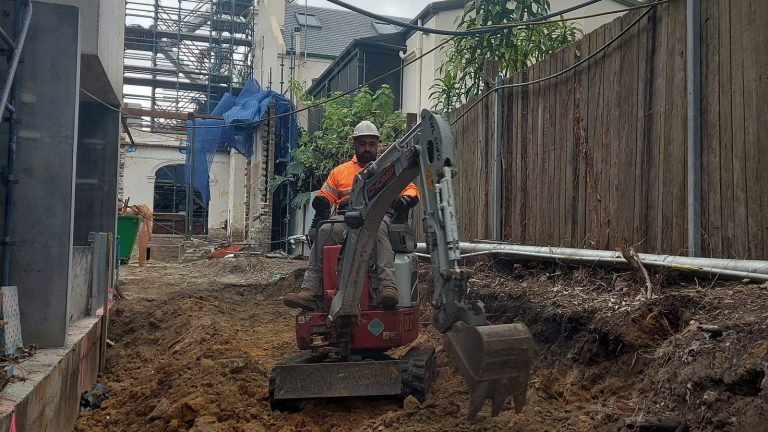
That changes the plant selection and the spoil logistics before it changes anything else. It is covered separately in our piece on tight access work.
How long does bulk excavation take?
Volume, rock and access decide it. A residential site cut in soil is typically one to five days. Rock, tight access and large spoil volumes extend it, and basements run to weeks.
Have a site to start? Contact us and send the plans. We own our plant, work to program with Tier 1 builders across Sydney, and quote earthworks with soil, rock and disposal split so you can see exactly what you are buying.